
Now what: the gap between good data and a decision
A credit union I know of has an attrition model. It runs. It produces a ranked list of members likely to leave, sorted by how much they hold on deposit.
The list sits in a folder.
Nobody is refusing to use it. There is no political fight, no turf problem, no technical failure. It is simply that no one owns the step between the list existing and somebody picking up a phone, and so that step does not happen.

The complaint is usually mis-stated
What leadership says, six months later, is that they are not seeing the return on the data.
That is an accurate observation attached to the wrong cause. They are seeing exactly the return you would expect from data nobody has used. The model did what it was asked to do. The gap is downstream of it, in the part of the process that has no job title attached.
I have come to think this is one of the single most expensive pattern in mid-sized financial institutions right now, and it is almost never described as what it is, because describing it correctly means admitting the problem is organizational rather than technical.
Why it keeps happening
Vendors sell solutions. What an institution actually needs is a capability, and a capability is a person with the knowledge plus the tool. Buy only the second half and you get a well-built thing that nobody is quite responsible for.
There is also a sequencing trap. The insight arrives before the plumbing exists to act on it. You surface that a valuable segment is leaving, and only then discover there is no CRM to run a retention program through, no scripts for the front line, and no measurement plan that would tell you afterwards whether it worked.
At that point the honest options are to build the plumbing, or to find a lower-tech route. Most organizations do neither, because the surfaced problem is now bigger than the original ask and nobody wants to be the person who reopens it.

The lowest-tech version works
Here is the part I would press hardest.
Print the list. Give it to branch managers. Ask them to call the top fifty members on it this month, with no script beyond asking how things are going and whether there is anything the institution should know.
No CRM project. No integration. No vendor. You will learn more in three weeks from those fifty conversations than from another quarter of modeling, and you will have a measurable action attached to a piece of data, which is the thing you were actually missing.
The instinct to wait until the proper system is in place is what turns a six-week fix into a two-year initiative. Waiting is rarely the cautious choice it feels like.
Who closes it
Somebody has to own the space between the insight and the action, and in most institutions that person does not exist on the org chart.
The analyst has done their job when the list is accurate. The marketing team did not commission the model and often do not know it exists. The vendor was paid for the data and has moved on.
With that said, this does not require a hire. It requires somebody with standing to sit between those groups for a defined period, decide which three things get done first, and stay long enough to see whether they worked. That is a scoped piece of work with a beginning and an end, and it is considerably cheaper than the models already sitting unused.
If you are heading into planning season with a data line you are not confident defending, this is usually where the missing return went.
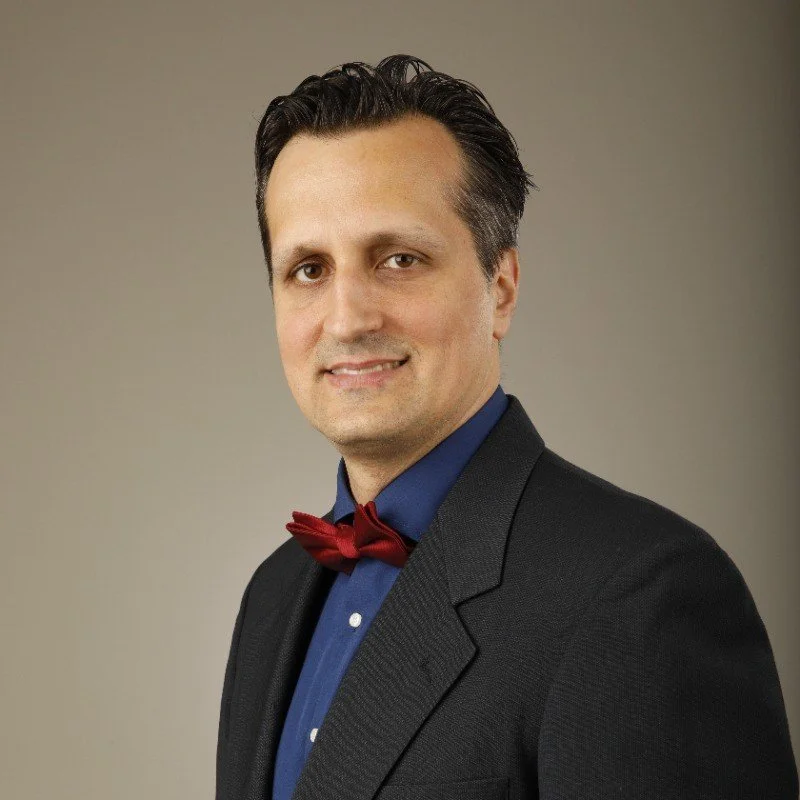
Elias Kruger, MBA, is the Managing Principal of Long-Range AI Consulting LLC, where he provides advanced analytics strategy and AI-powered business transformations tailored for midmarket sectors, including community banks, credit unions, and fintechs. His career spans over 22 years of continuous reinvention across finance, data science, and enterprise AI leadership, notably serving as a Vice President at Wells Fargo where he co-led an internal analytics consulting program of over 60 analysts. As a diagnostic-first practitioner, Elias designs customized human-empowering AI-enabled solutions ranging from multi-agent orchestration, RAG-powered workflows to predictive modeling that drives operational efficiency and valuation increases. He is a frequent speaker at major industry conferences like Finovate.