
The Strategist Who Stays in the Room
Most consultants hand you a plan and leave. You are left holding the document, the vendor relationships, and the gap between what was recommended and what actually gets built. That is the model most mid-market operators have experienced, and it is why the word "consultant" carries the weight it does.
There is a different model. It does not require a big firm.

hand holding conductor pen
One Thread, Many Hands
Here is what I actually do: I hold the diagnostic thread from the beginning of an engagement to the end. The question of what is broken, what is worth fixing, and in what order, that stays with me. Execution, where it requires depth I do not have, routes to specialists I trust.
I call this ecosystem thinking. The work wins, not my ego or my billable hours.
The traditional model inverts this. A large firm sells you a senior partner, delivers through junior staff, and packages the work into a report you have to execute without them. The orchestration model keeps strategy where it belongs, with the person who understands the full picture, while letting specialists do what they do best.
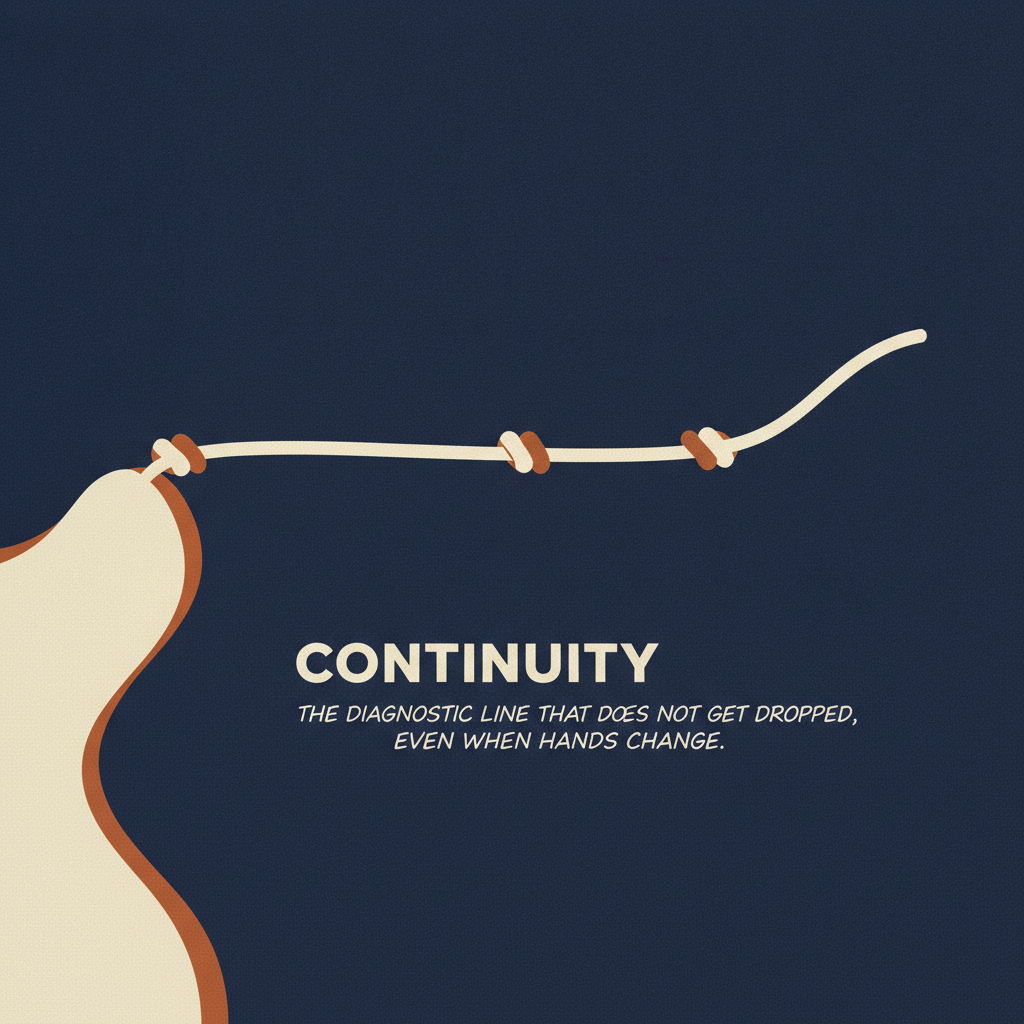
continuity thread
Where My Knowledge Ends
Data and AI execution, that is where I am strong. Diagnosis, architecture, the translation between what the data says and what your business should do, I will stay in that lane as long as the engagement requires it.
What I will not do is pretend that lane covers everything. If the data surfaces a marketing attribution problem that calls for a specialist in paid media, I bring one in. If the diagnosis points to a workforce process that needs an operations mind, that person comes into the room. The client relationship remains mine. The accountability for the whole does not dissolve because the execution spread across more than one set of hands.
This is what I mean when I say I orchestrate. I am not a general contractor who disappears after the blueprint. I am the partner who stays and routes.
Why This Matters for the Mid-Market
A mid-market operator does not need a firm. What that operator needs is senior thinking, the kind that can tell a real problem from a surface symptom, paired with specialists who execute at depth without the overhead of a large agency or a consulting practice built to justify its own size.
The fractional model, when it is done right, is that. One relationship, one diagnostic thread, a network of trusted people who move when and where the work calls for them.
With that said, the model only works if the strategist is honest about the edges of their own knowledge. Ecosystem thinking is not a way to look bigger than you are. It is a commitment to the client that the work will be done right, even when doing it right means bringing in someone else.

A simple gate
The Question Worth Asking Before You Hire Anyone
Consider the last engagement where you felt the plan did not survive contact with reality. Was the problem that the advice was wrong? Or was it that the person who gave the advice was no longer in the room when implementation hit the hard part?
In my experience, it is more often the second one. The plan was reasonable. The accountability evaporated.
What I offer is not a larger team or a wider set of services. It is the commitment to stay, route what needs to be routed, and hold the thread until the work is done. Hence the name: long range. The work is supposed to reach.
Looking to rethink the your business strategy. Let’s talk.
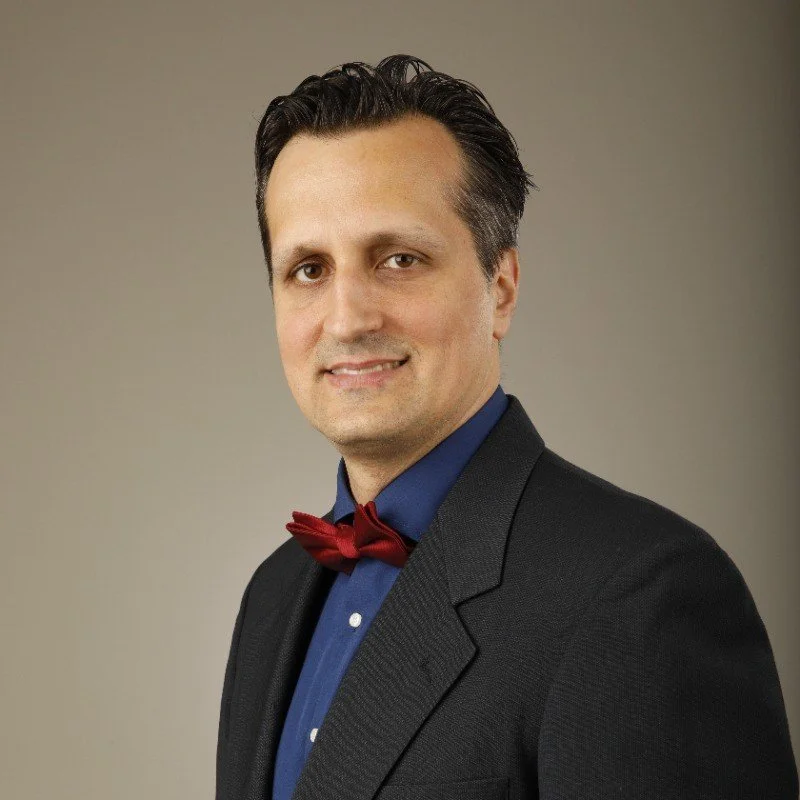
Elias Kruger, MBA, is the Managing Principal of Long-Range AI Consulting LLC, where he provides advanced analytics strategy and AI-powered business transformations tailored for midmarket sectors, including community banks, credit unions, and fintechs. His career spans over 22 years of continuous reinvention across finance, data science, and enterprise AI leadership, notably serving as a Vice President at Wells Fargo where he co-led an internal analytics consulting program of over 60 analysts. As a diagnostic-first practitioner, Elias designs customized human-empowering AI-enabled solutions ranging from multi-agent orchestration, RAG-powered workflows to predictive modeling that drives operational efficiency and valuation increases. He is a frequent speaker at major industry conferences like Finnovate.