
Specialized Knowledge is the New Superpower. The Tool is Just an Enabler
There is a widespread assumption running through the business world right now: that AI is closing the gap between generalists and specialists, making deep expertise less necessary by the day. The more AI can answer, the thinking goes, the less any one person needs to know.
That assumption is worth questioning. Closely.
What is actually happening in the field, among the operators and advisors that work with AI tools every day, points in the opposite direction. Deep expertise is not being replaced. It is being amplified, in ways that are changing what a senior professional can do inside a single engagement.

The mindkey
What AI Does Well, and Where It Stops
AI tools are genuinely capable. They can synthesize, summarize, draft, and surface patterns across large bodies of text with remarkable speed. For anyone who needs to produce, query, or reformat known information, the tools are transformative.
Yet there is a ceiling. The tools are trained on what has been written down, formalized, and published. They are, in a meaningful sense, a very fast mirror of recorded human knowledge.
What does not make it into the training data is analog knowledge. The kind of knowing that lives in the hands, the gut, and the pattern-recognition built from years of inhabiting a domain. A credit union executive who has watched five technology rollouts fail recognizes the warning signs before the first status report. A supply chain operator who has run a disruption knows which supplier relationship to call first, and why. That situational intelligence is not in any dataset. It cannot be retrieved by a prompt.
This is the boundary AI does not cross. And it is precisely where deep expertise becomes more valuable, not less.
The Multiplier Effect
Consider what happens when someone with genuine depth in a field starts using AI tools fluently. The bottleneck in their work has rarely been the quality of their thinking. It has been the volume of supporting work: the research, the documentation, the synthesis of background, the drafting of follow-on materials. These are the tasks that slow down a senior person, the ones that used to require a team of analysts or a longer engagement timeline.
AI removes that bottleneck. The experienced professional can now run more scenarios, produce sharper deliverables, and bring their best thinking to bear on more problems in the same window of time. What was once a senior person plus a small team is, increasingly, a senior person with tools and clear intent.
Hence the multiplier is not a junior generalist with AI access. It is a domain-seasoned professional who knows which questions to ask, how to evaluate the output, and where to push back when the model confidently produces something plausible but wrong. That last skill, the ability to catch a confident error, is not teachable through prompting. It comes from having been in the room when similar things went sideways.

Magnifying the point
Why Generalism Has a Shorter Ceiling Now
This is where the original assumption breaks down most clearly. A generalist with access to the same tools can produce materials that look similar to what a specialist produces. The surface resemblance is real, and it is part of why the "AI replaces expertise" narrative has traction.
With that said, resemblance is not the same as reliability. In complex, high-stakes work, the difference between an answer that looks right and an answer that is right is exactly the kind of judgment deep experience provides. The generalist using AI does not know what they do not know. The specialist using AI knows which outputs to trust, which to verify, and which to discard, because they have the internal model to evaluate against.
What AI does, in this light, is raise the floor for everyone. It gives all professionals access to faster production and broader information synthesis. But it does not raise the ceiling for people without the experiential foundation to guide it. The ceiling is still expertise. The tools just let the people with that expertise reach it faster and more often.
Furthermore, the margin between a good answer and the right answer tends to compound over time in client work. A flawed diagnosis, delivered fluently and with well-formatted supporting materials, is still a flawed diagnosis. The cost of that error surfaces later, and it is usually larger than the cost of the original engagement.

pulling the thread
What This Means for How You Buy Strategy
For mid-market operators buying advisory work, this shift has a practical implication worth sitting with.
The question to ask is not which advisor has the most impressive AI workflow. The question is which advisor brings domain depth that the tools cannot replicate, and then uses the tools to work faster and more precisely on your behalf.
What you are looking for is a professional whose knowledge of your industry or function goes deep enough that they can evaluate, challenge, and correct the AI's output, not just relay it. That combination, deep expertise augmented by capable tools, is where the real leverage lives in a fractional or project engagement.
In short, the superpower is not the tool. It never was. The superpower is the person that knows when to trust the output and when to override it, and has enough at stake in your result to tell you the difference.
Looking to rethink the your business strategy. Let’s talk.
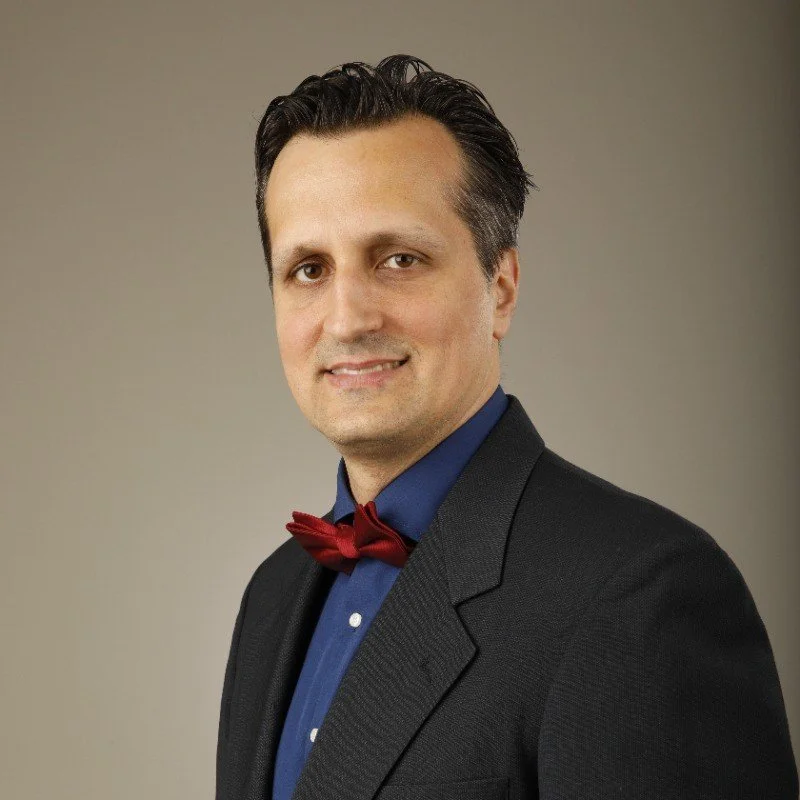
Elias Kruger, MBA, is the Managing Principal of Long-Range AI Consulting LLC, where he provides advanced analytics strategy and AI-powered business transformations tailored for midmarket sectors, including community banks, credit unions, and fintechs. His career spans over 22 years of continuous reinvention across finance, data science, and enterprise AI leadership, notably serving as a Vice President at Wells Fargo where he co-led an internal analytics consulting program of over 60 analysts. As a diagnostic-first practitioner, Elias designs customized human-empowering AI-enabled solutions ranging from multi-agent orchestration, RAG-powered workflows to predictive modeling that drives operational efficiency and valuation increases. He is a frequent speaker at major industry conferences like Finnovate.